
Image: Headline Buzz
Fake NYPD Officers, Real Arrests: How an AI-Powered Scam Ring Targeted Americans From Kuala Lumpur
Malaysian police have broken up an international scam ring that posed as New York police officers to target victims in the United States — using real uniforms, a fake NYPD backdrop, forged documents and artificial intelligence to make the lie convincing on video calls. Eleven foreign nationals were arrested in a raid on a luxury condominium in Bukit Ceylon, Kuala Lumpur, on Tuesday, 24 November 2026.
The case shows how far police-impersonation scams have come. The scammers dressed the part, staged the scene, and used AI face-swapping so the “officer” on a video call looked real. Here is how it works — and how to spot it before it costs you money.
The raid: 11 arrested in a Bukit Ceylon condo
The raid was carried out at about 5pm on Tuesday, 24 November, by the Dang Wangi district police’s Commercial Crime Investigation Division together with the Special Branch, acting on intelligence about a scam targeting victims in the United States. The operation centre was a condominium unit in Bukit Ceylon, in the heart of Kuala Lumpur, which police believe was rented for about RM15,000 a month.
Those arrested were aged between 22 and 51: four South Africans, three Taiwanese, and one citizen each from Mexico, Zimbabwe, Kenya and India. Police said they are believed to have entered Malaysia as tourists on social visit passes, and that all 11 are believed to have worked as syndicate operators. They have been remanded for four days, from 25 to 28 November, to assist investigations under Sections 420 and 511 of the Penal Code — cheating and attempted cheating.

Photo: RDNE Stock project / Pexels
Police believe the syndicate had been operating since the middle of this year. No number of victims, total amount stolen, or specific payment method demanded has been reported. The investigation continues, and the suspects have not been convicted of any offence.
What police seized
The haul shows how much staging went into the deception. Officers seized 31 mobile phones, seven laptops, a monitor, a computer CPU and an internet router — the hardware of a call centre. They also found three sets of clothing resembling New York Police Department uniforms, a signboard bearing the NYPD logo, a map of New York City, and a scam script — the written playbook the operators followed on their calls.
Dang Wangi police chief Assistant Commissioner Ahmad Azwan Amin Nordin displayed the seized uniforms at a press conference on Thursday, 26 November. He said forensic examination of the seized devices indicated the syndicate was suspected of impersonating NYPD officers and targeting victims in the United States.
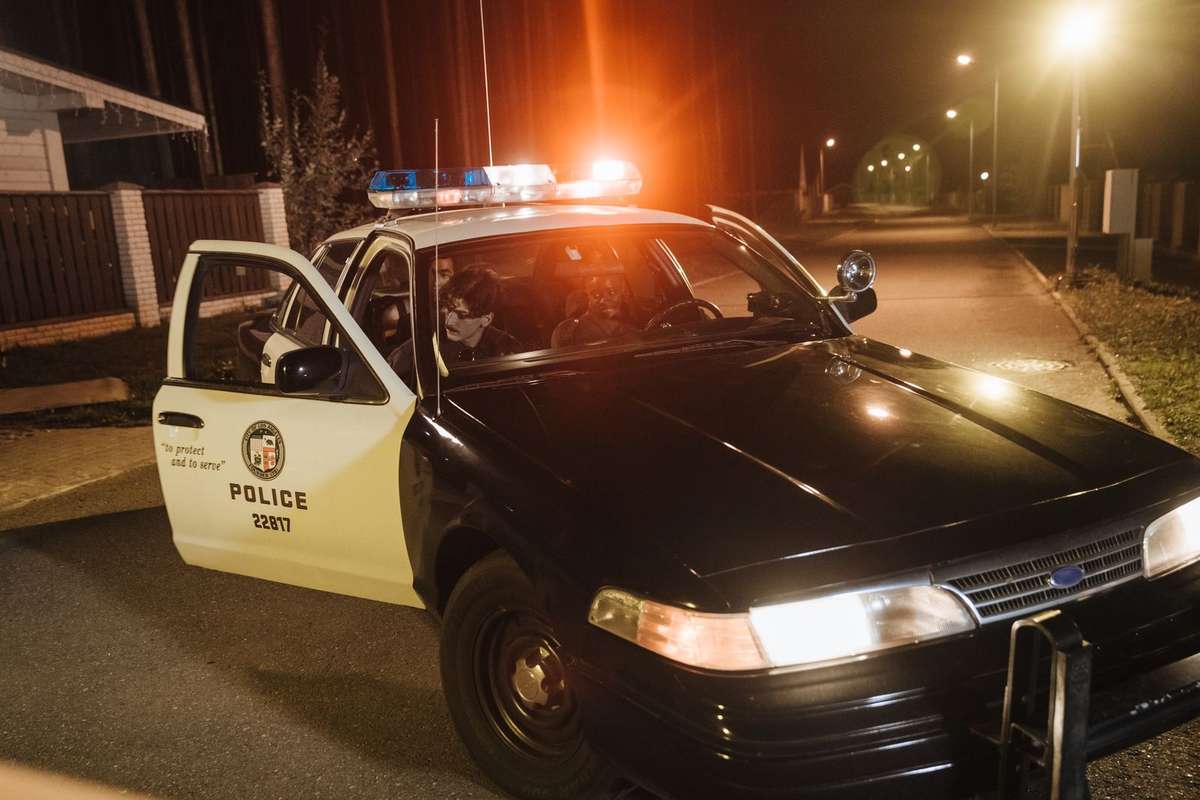
Photo: cottonbro studio / Pexels
How the scam worked, step by step
Police described a routine built to survive a video call — the moment when most scams fall apart.
Step 1: First contact. The syndicate contacted victims online and by phone, posing as New York police officers. The opening message was designed to create alarm: the victim was told they were involved in criminal activities and money laundering.
Step 2: The video call. The scammers moved victims onto video, where, wearing NYPD-style uniforms in front of a backdrop bearing the department’s logo, they looked like officers in a police station.
Step 3: The AI disguise. Investigators found the syndicate used artificial intelligence, including face-swapping techniques, background images and documents resembling official NYPD records, to convince victims they were genuine police officers. The face on screen was not necessarily the face of the person speaking.
Step 4: Fear, then pressure. The money-laundering claim was the lever. Once a person believes the police think they are a criminal, they stop thinking clearly — and that is when the scammers pressed for compliance and, police said, extorted them.
Step 5: The script. Operators worked from a prepared script, which police recovered in the raid. That is why the calls sounded polished and professional: every objection had a rehearsed answer.
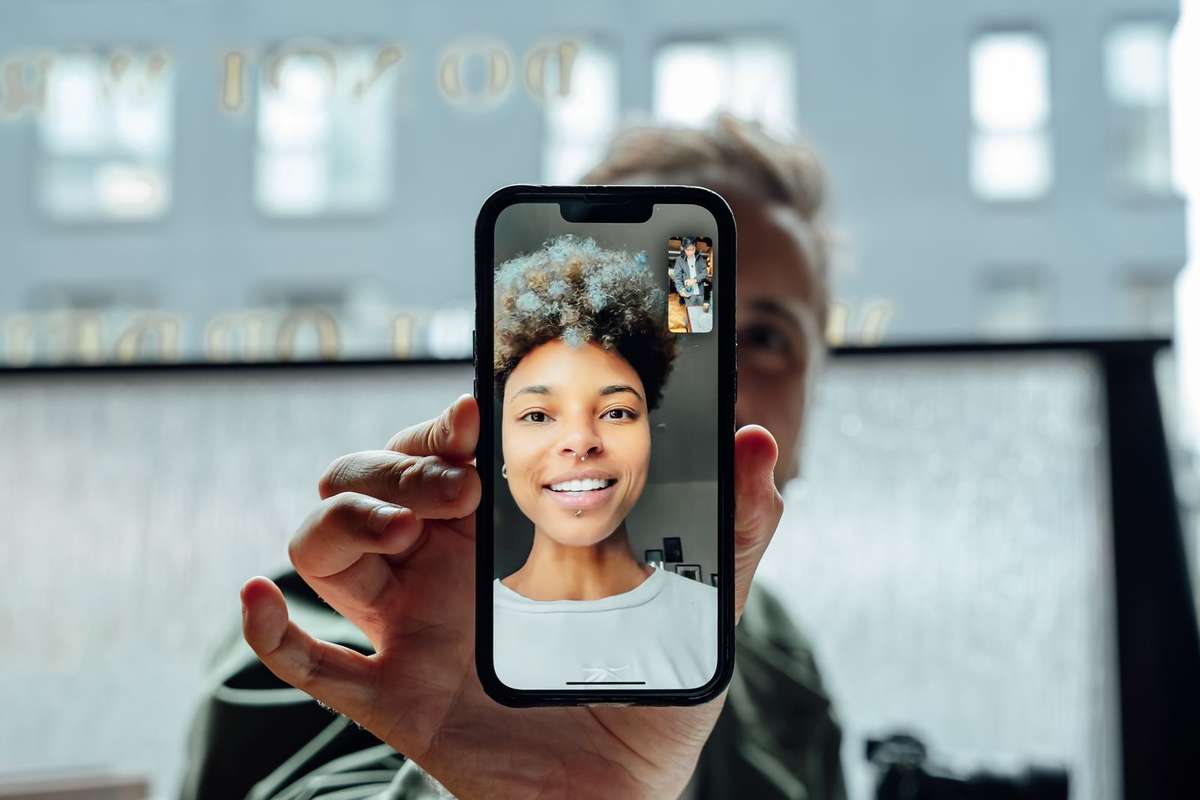
Photo: Miguel González / Pexels
Why this scam is so dangerous
Police-impersonation scams work because they hijack trust. Most people have been taught since childhood to cooperate with the police, and a uniform, a badge and an official-looking document short-circuit scepticism. Add a video call — the format we associate with real meetings — and AI that can put a convincing face on screen, and the usual warning signs disappear.
It also shows the industrial scale of the problem: an 11-person operation in a rented condo, running 31 phones and seven laptops, with costumes, props and scripts. Scam syndicates now operate like businesses.

Photo: Pavel Danilyuk / Pexels
Seven red flags that the “officer” is a scammer
Real police do not behave the way these callers do. Watch for these signs:
- You are accused of a crime out of nowhere. A real investigation does not begin with a stranger on a video call telling you that you laundered money.
- The call demands urgency and secrecy. “Act now or you will be arrested” and “do not tell anyone” are pressure tactics, not police procedure.
- They want money to “clear” your name. Police do not ask you to pay a fine, fee or bail over the phone or by video call to make a criminal case go away.
- They ask for payment by gift card, wire transfer, cryptocurrency or a payment app. These are the payment methods scammers prefer because they are hard to reverse. A real agency will never ask for them.
- The “evidence” arrives on screen. Documents flashed on a video call, a badge held up to a camera, a logo on the wall — all of it can be faked, and police say AI face-swapping and forged documents were part of this routine.
- The caller ID looks odd — or oddly familiar. Scammers can spoof numbers so a call appears to come from a police department. A familiar-looking number proves nothing.
- They threaten arrest if you hang up. A genuine officer will give you a case reference and tell you to verify it through official channels.
What to do if you get a call like this
Hang up. Do not argue or stay on the line to “prove” anything — every minute on the call is another minute of pressure. Then verify independently: look up the non-emergency number of your local police department yourself (never use a number the caller gave you) and ask whether any case involves you.
Never send money, gift-card codes, cryptocurrency or bank details to someone who contacted you claiming to be police. If you already sent money, contact your bank or card issuer immediately about reversing the payment, then report it to the FBI’s Internet Crime Complaint Center at ic3.gov and to the Federal Trade Commission at reportfraud.ftc.gov. Keep screenshots of the messages, the caller’s number and any documents they sent.
Warn others too: tell family members, especially older relatives, that police-impersonation calls now come with uniforms, video and AI faces. The Kuala Lumpur arrests show law enforcement is catching these operations — but the best defence is still a person who hangs up.
Sources
- New Straits Times, “11 foreigners held over NYPD impersonation scam in KL”, 26/11/2026 — https://www.nst.com.my/amp/news/nation/2026/11/1586536/11-foreigners-held-over-nypd-impersonation-scam-kl
- Free Malaysia Today, “Cops nab scam syndicate members posing as NYPD officers”, 26/11/2026 — https://www.freemalaysiatoday.com/category/nation/2026/11/26/cops-nab-scam-syndicate-members-posing-as-nypd-officers
- The Sun (Malaysia), “KL luxury condos used for drug packaging, 6 foreigners held” (includes the NYPD scam raid details), 26/11/2026 — https://thesun.my/news/kl-luxury-condos-used-for-drug-packaging-six-foreigners-held/
- Lianhe Zaobao, “Malaysian police bust cross-border scam ring that used AI face-swapping to impersonate NYPD”, 27/11/2026 — https://www.zaobao.com.sg/en/news/sea/malaysian-police-bust-cross-border-scam-ring-used-ai-face-swapping-impersonate-nypd
- Asia Journalist Association (The Asian), “AJA Newsbites – November 27, 2026”, 27/11/2026 — https://theasian.asia/archives/205671